

Mindcast.50 || Grischa Lichtenberger
The author of our short MINDCAST.The 50th anniversary piece is the accomplished GRISCHA LICHTENBERGER, who has put together a fascinating and varied mix featuring plenty of material from his own archive. Grischa Lichtenberger (*1983 in Bielefeld) is a producer of electronic music, installation, and multimedia art. Since 2009, his works appear, among others, on the renowned label Raster-Noton, and he was awarded an honorable mention at the Ars Electronica back in 2013. Grischa also composed the music for the choreography ‘Last Work’ by Ohad Naharin for the Batsheva Dance Company in Tel Aviv.
Lichtenberger has presented his audiovisual live show at prestigious international festivals and concerts (including Elektra and Mutek Montreal, Electron Festival Geneva, Sou Festival Tbilisi, and A l’Arme Festival Berlin), and his installation and visual works have also been realized nationally and internationally. The artistic works of Grischa Lichtenberger are characterized by a combination of rawness and refinement, prudence and intimacy. Dance, club culture, and pop collide with an individual aesthetic that can equally be found in museum architecture, in the living room, in techno clubs, or in concert halls.
Grischa is looking forward to a busy year, 2019, with several releases planned, including the concluding second part of the five-release series “la demeure / il y a péril en la demeure.” We’re very delighted and proud that Grischa found the time to create this exclusive anniversary mix for us. Here are a few words from him about this compilation:
“The mix deals with distortion, featuring various examples from my own archive and pieces that I appreciate. The distortion is maybe a good example of the significance of technology beyond its functionality. On the one hand, distortion is always a kind of musical taboo, a border of the concept of music itself, and an unwanted by-product. On the other hand, youth culture, rock ‘n’ roll, punk, hardcore, grunge, noise—they all have shared a certain appreciation for distortion. What they intend/intended with distortion is not the ‘sound quality of analog saturation’ (as is the word today), but a certain de-symbolization of musical functionality that they have found reflected in their misuse of technology.”
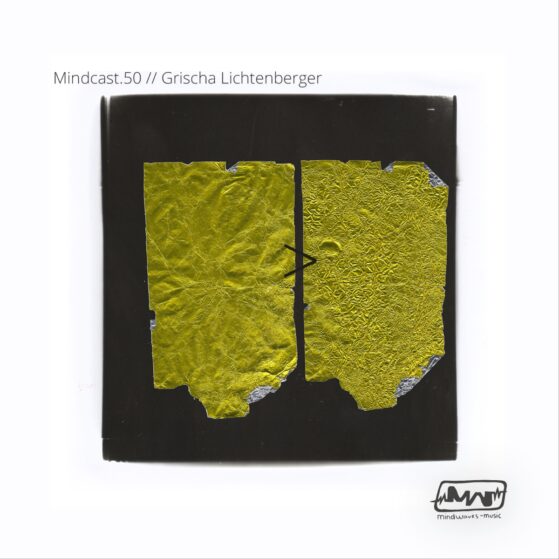
Mindcast Mixtape 09/2018 ||
01.01 Grischa Lichtenberger – 0616_06_beep long 3 bohrmaschine [Not On Label, 2016]
01.02 Pouse around the House – How To Use Wall Plugs [YouTube, 2016]
01.03 This Heat – Horizontal Hold [Piano, 1979]
02.00 Grischa Lichtenberger – 0616_30 b4b recs [Not On Label, 2016]
03.01 The Fear Ratio – Cam [Skam, 2015]
03.02 Borg / Brötzmann / Parker / Bakr – Part 1 [GROB, 2003]
04.01 Low – Quorum [Sub Pop, 2018]
04.02 Low – Dancing And Blood [Sub Pop, 2018]
04.03 Grischa Lichtenberger – 0417_20 lv2d bsss snss ss 1 [Not On Label, 2017]
04.04 Grischa Lichtenberger – 0618_04 re 0218 21 gtDRS2s cut 11 [Not On Label, 2018]
05.00 Grischa Lichtenberger – 0218-21 lv 1 d [Not On Label, 2018]
06.01 SDEM – Cadmium [Not On Label, 2018]
06.02 Grischa Lichtenberger – 0316_25_mel inf aesdree [Not On Label, 2016]
07.01 Grischa Lichtenberger – 0918_15 re 0717 07 lv 1 s 4 c2 RECS_nm [Not On Label, 2018]
07.02 Grischa Lichtenberger – 0615_19 schwere erden [Not On Label, 2015]
08.00 Trans Am – Rough Justice, Zero Tolerance [Thrill Jockey, 1997]
09.01 Grischa Lichtenberger – 0115_07 re 0114 feedbacks 2048 1024 512 256 128 96 64 48 [Not On Label, 2015]
09.02 Grischa Lichtenberger – 0315_10 dj jellyball 1 [Not On Label, 2015]
10.00 John Lee Hooker – Thinking Blues [King, 1950]
11.01 Grischa Lichtenberger – 0805_24 tv sketch [Not On Label, 2005]
11.02 Grischa Lichtenberger – Mmcr Vnqr [Raster-Noton, 2015]
12.01 Jim Jarmusch, John Lurie – Permanent Vacation Opening Theme [Cinesthesia Productions, 1980]
12.02 The Jaynetts – Sally, Go ‘Round the Roses (Grischa Lichtenberger Edit) [Not On Label, 2018]
Support the artists and labels—buy the music if you like it.
Credits ||
Mixed by || Grischa Lichtenberger
Artwork by || Grischa Lichtenberger
Download ||
Mindcast.50 || Grischa Lichtenberger
(5680 Downloads)
FOLLOW MINDCAST: